Webinar Replay
Finding the Right Balance in Your Forex Portfolio
Many businesses manage foreign exchange through individual transactions, without a clear view of how decisions connect across the wider portfolio. Over time, this can lead to inconsistent outcomes, misaligned cover, and limited visibility across financial performance.
This session explores how businesses can approach forex as a structured portfolio — where balance, timing, and decision-making become central to achieving more consistent outcomes.
-
Nicky Breach
- Reviewed by the Valufin Forex Treasury Team
- 3 minutes read
In this webinar, Sharon Constançon introduces the F – Find stage of the VALUFIN framework, focusing on how businesses actively manage their forex portfolio. The session explores how decisions are made across instruments, time horizons, and market conditions, and how these interact within the broader business environment.
The discussion covers key areas including portfolio structure, ratios of cover, instrument selection, and the role of brokers and banks. It also highlights how internal factors such as policies, accounting approaches, and business cycles influence outcomes.
A central theme throughout the session is the role of human behaviour in forex decision-making — and how this can impact consistency and performance over time.
This session is particularly relevant for finance directors, treasury managers, and business leaders responsible for managing international transactions and financial exposure.
Key Takeaways
Managing forex as a portfolio allows businesses to move beyond isolated decisions and create a more consistent and structured approach to outcomes.
Key themes explored in this session include:
- The importance of viewing forex as a portfolio of decisions, not individual trades
- How ratios of cover influence flexibility and risk over time
- Why timing and time horizon play a critical role in decision-making
- The impact of market volatility and trends on portfolio performance
- How different instruments and solutions affect cost, flexibility, and outcomes
- The influence of internal policies, accounting methods, and business processes
- The role of brokers, banks, and platforms in shaping execution
- How behavioural biases can delay or distort decision-making
“Forex should not be managed as individual transactions, but as a portfolio of decisions over time.” ~ Sharon Constançon, CEO | Valufin
Overview
Understanding Forex as a Portfolio
The session begins by positioning forex as a portfolio activity, requiring structured thinking across multiple decisions rather than isolated transactions.
The Role of the Business and Supply Chain
Exploration of how business models, supply chains, and transaction flows influence portfolio structure and decision-making.
Natural Hedging and Internal Structures
Discussion of natural hedging concepts and how internal processes, pricing, and accounting create multiple reference points within the portfolio.
Ratios of Cover and Policy Design
Overview of different approaches to cover ratios and how policies can either enable or restrict effective decision-making.
Time Horizon and Market Volatility
Examination of how short-term volatility and long-term trends interact, and how businesses respond across different timeframes.
Instruments and Solutions
Introduction to key forex instruments, including spot and forward contracts, and how they are used within the portfolio.
Decision Points in Portfolio Management
Identification of key decision moments, including when to hedge, when to transact, and how to align actions with business needs.
Providers: Brokers, Banks, and Platforms
Discussion of how different providers operate, including their structures, limitations, and influence on execution.
Behavioural Science and Decision-Making
Exploration of human biases and how they affect timing, consistency, and overall portfolio outcomes.
Integrating External Factors into Business Decisions
How market conditions, interest rates, and external variables are incorporated into structured portfolio management.
“Your forex strategy should always start with your business — not the market.” ~ Sharon Constançon, CEO | Valufin
How This Topic Fits Into the VALUFIN Framework
This session forms part of the F – Find stage of the VALUFIN framework.
At this stage, businesses move from understanding their exposure to actively structuring and balancing their forex portfolio — aligning decisions across instruments, timing, and execution. It brings together internal knowledge and external market dynamics to support more consistent and informed decision-making.
Featured Article
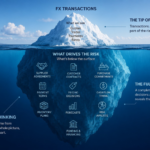
Foreign exchange risk is rarely created by a single transaction. It emerges from the combined impact of supplier agreements, customer contracts, payment terms, pricing decisions, and treasury actions across the business.
The challenge is not simply executing foreign exchange transactions efficiently, but managing the portfolio those transactions collectively create.
Discover how portfolio thinking improves decision-making by balancing cover ratios, instruments, risk positioning, providers and behavioural influences across the wider forex portfolio.
Speaker

Sharon Constançon is a highly accomplished CEO and renowned specialist in forex risk management and treasury strategy. With over 25 years of experience advising international companies, she brings sharp insights into how financial planning intersects with operational resilience. Sharon leads Valufin, a firm delivering tailored treasury and risk solutions to help companies navigate currency volatility and global uncertainty with confidence.
She has supported over 200 businesses with risk evaluations, transaction cost analysis, and FX treasury strategies. Sharon is also an experienced board advisor and educator, often speaking on governance, finance, and strategic resilience in fast-moving markets.
Move from Forex Understanding to Portfolio Control
Explore how Valufin helps businesses structure and actively manage their forex portfolio.